Simon Njami
In this new series, Aïda Muluneh pushes her inquiry into the meaning of the image in the twenty-first century even further. What message can one carry today? Is art a space for societal debate and conflict resolution? We are not speaking here of global conflicts, which fall under the responsibility of others, but of the inner conflicts that punctuate our daily lives like Socratic enigmas—inviting us to reconsider certain realities. Artistic creation, when it deliberately situates itself within acknowledged fiction, may be the space best equipped—if not to provide answers, then at least to pose questions whose roots are too abstract to be resolved by reason alone. Art thus becomes a mode of access that relies not only on intellect, but on emotion and the senses. Rather than theorising, art suggests.
This series of images operates as a double act of focus. First, for the artist herself, who offers the result of a journey spanning several decades, exposing—without unnecessary modesty—her questioning of both the medium and the world. I am particularly drawn to the double meaning of the expression mise au point, so dear to photographers, as it signifies both “adjusting the sharpness of an image” and, in common usage, the clarification of a question. Muluneh has always maintained a social consciousness in her work, one oriented outward. Her universal message addressed major issues confronting the world, particularly misunderstandings and prejudices faced by Africans and women. Her work could be described as societal, in the sense that she positioned herself at the edge of the phenomena she chose to explore.
The act of focus at stake here is far more overtly personal. It is not so much the state of the world that the artist depicts, but the state of her own inner reflection. Her thinking revolves around the duality of being, as articulated by Gilles Deleuze:
“Aesthetics suffers from a wrenching duality. On the one hand, it designates the theory of sensibility as the form of possible experience; on the other, the theory of art as the reflection of real experience. For the two meanings to converge, the conditions of experience in general must themselves become conditions of real experience; the work of art then appears as experimentation.”
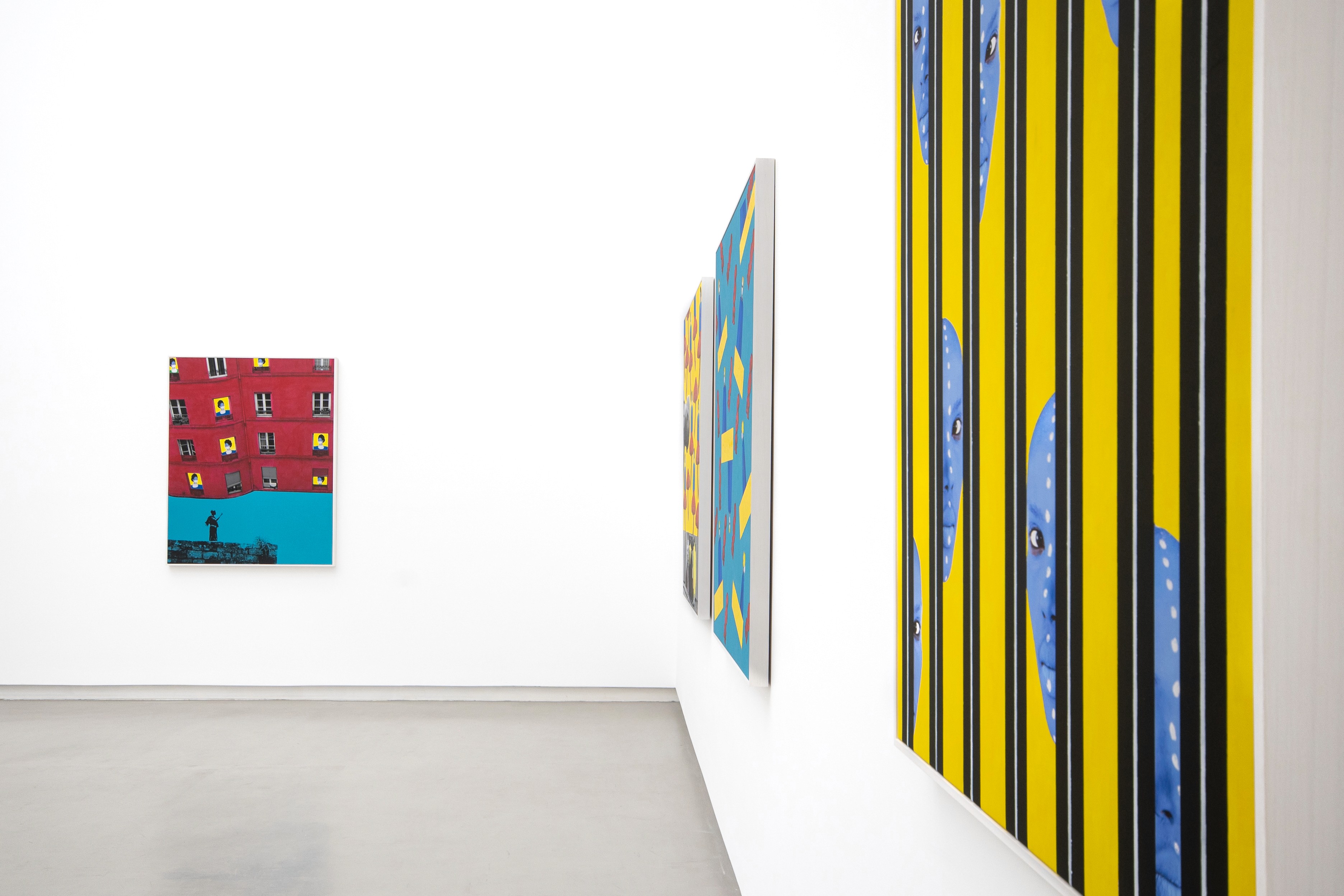
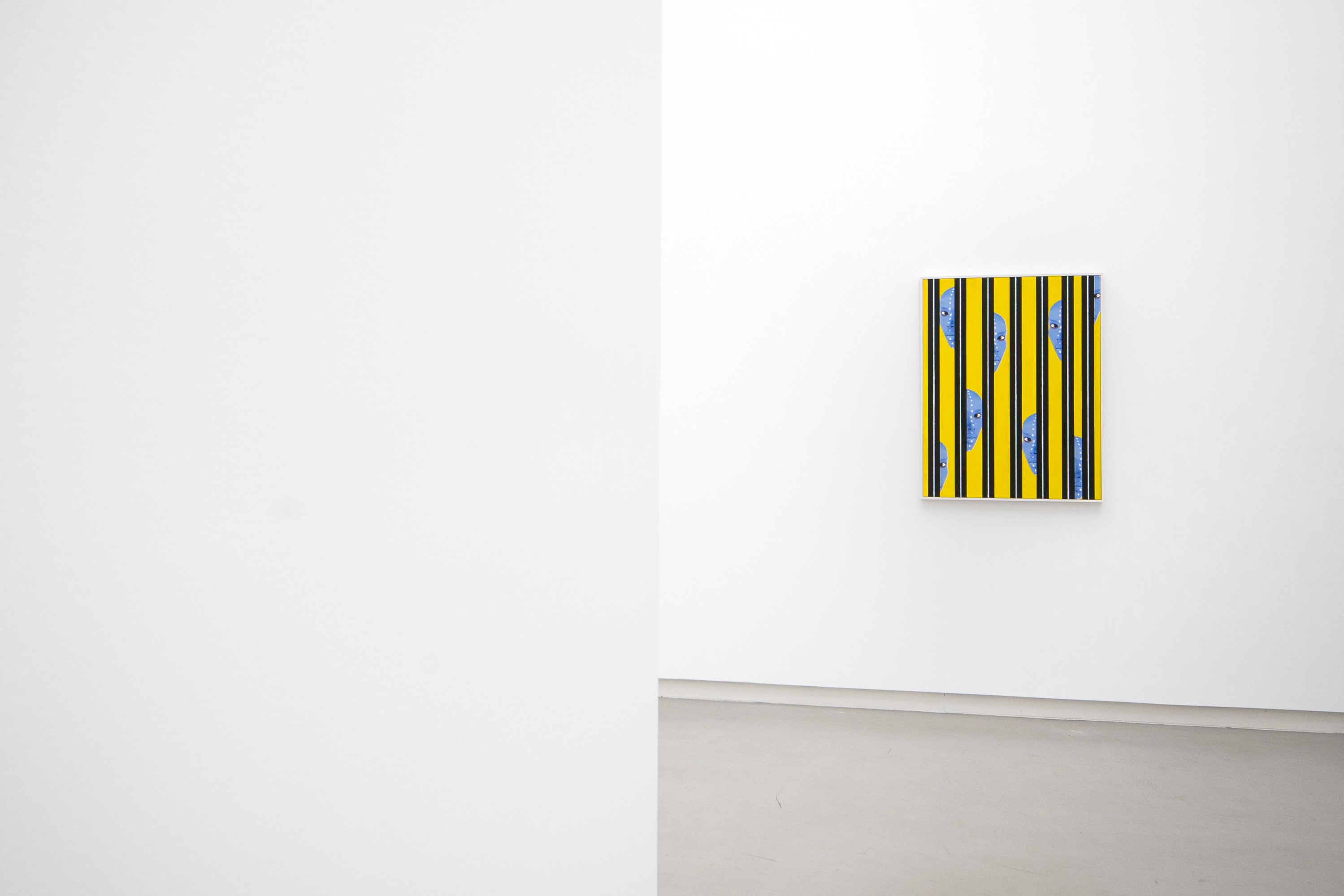
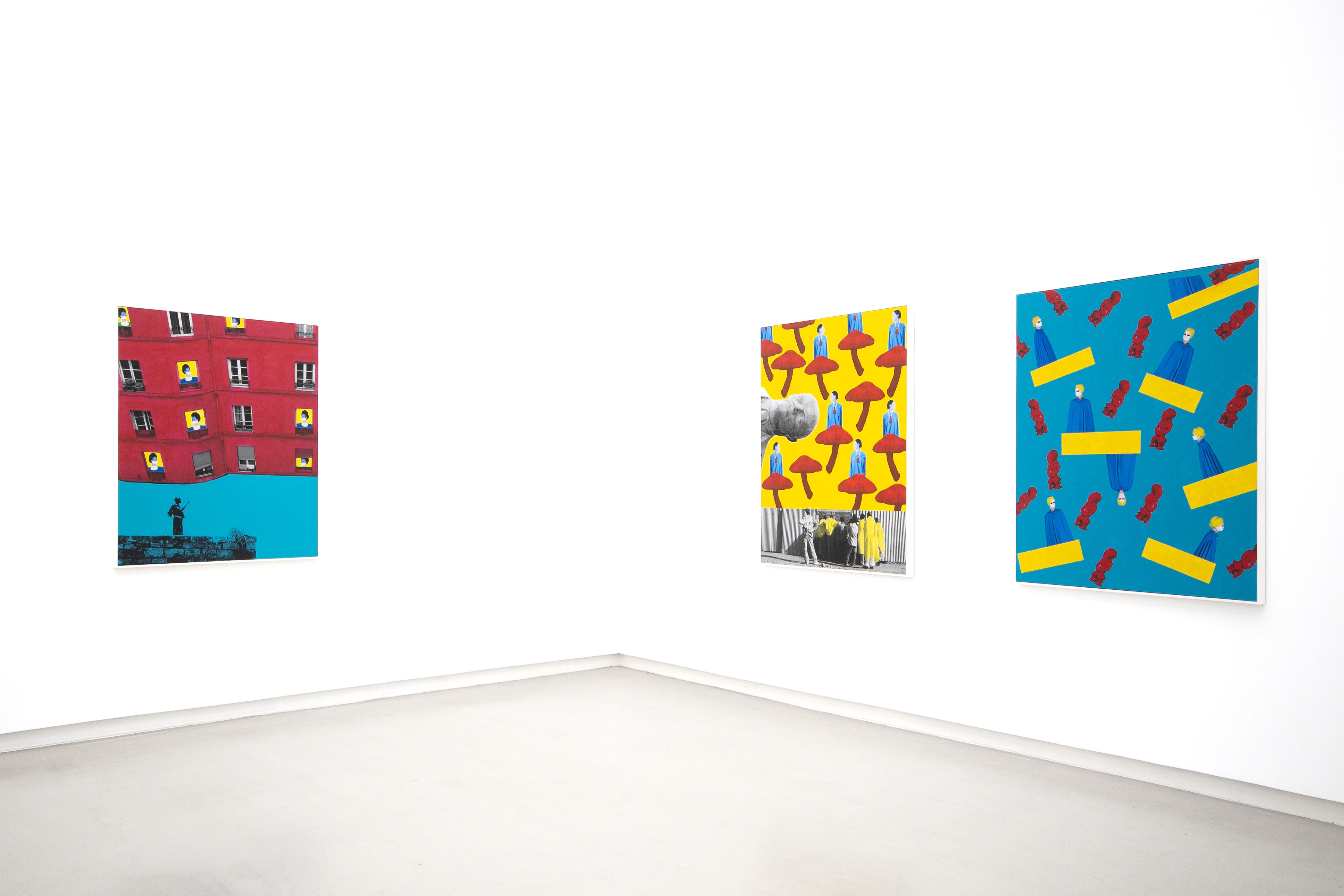
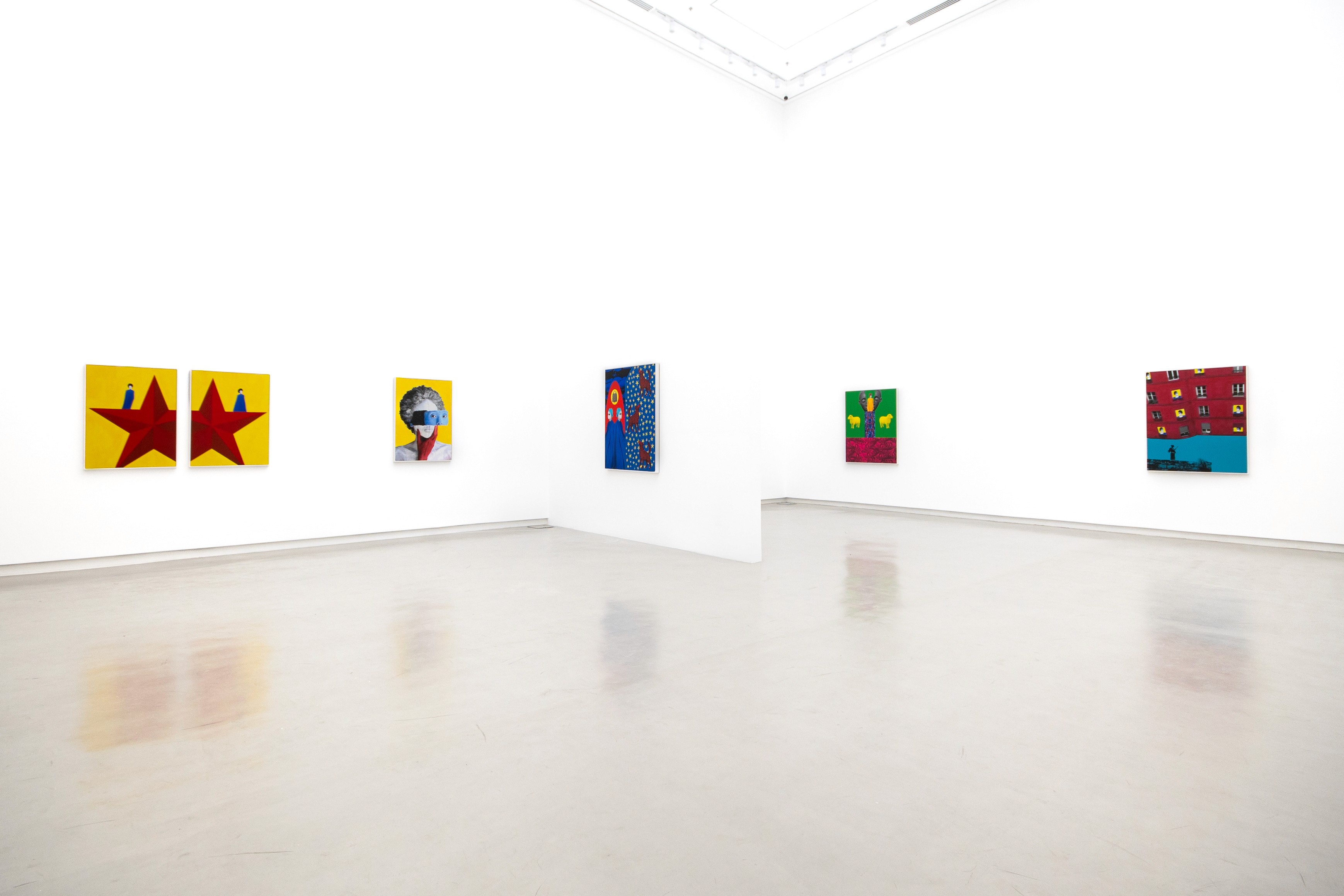
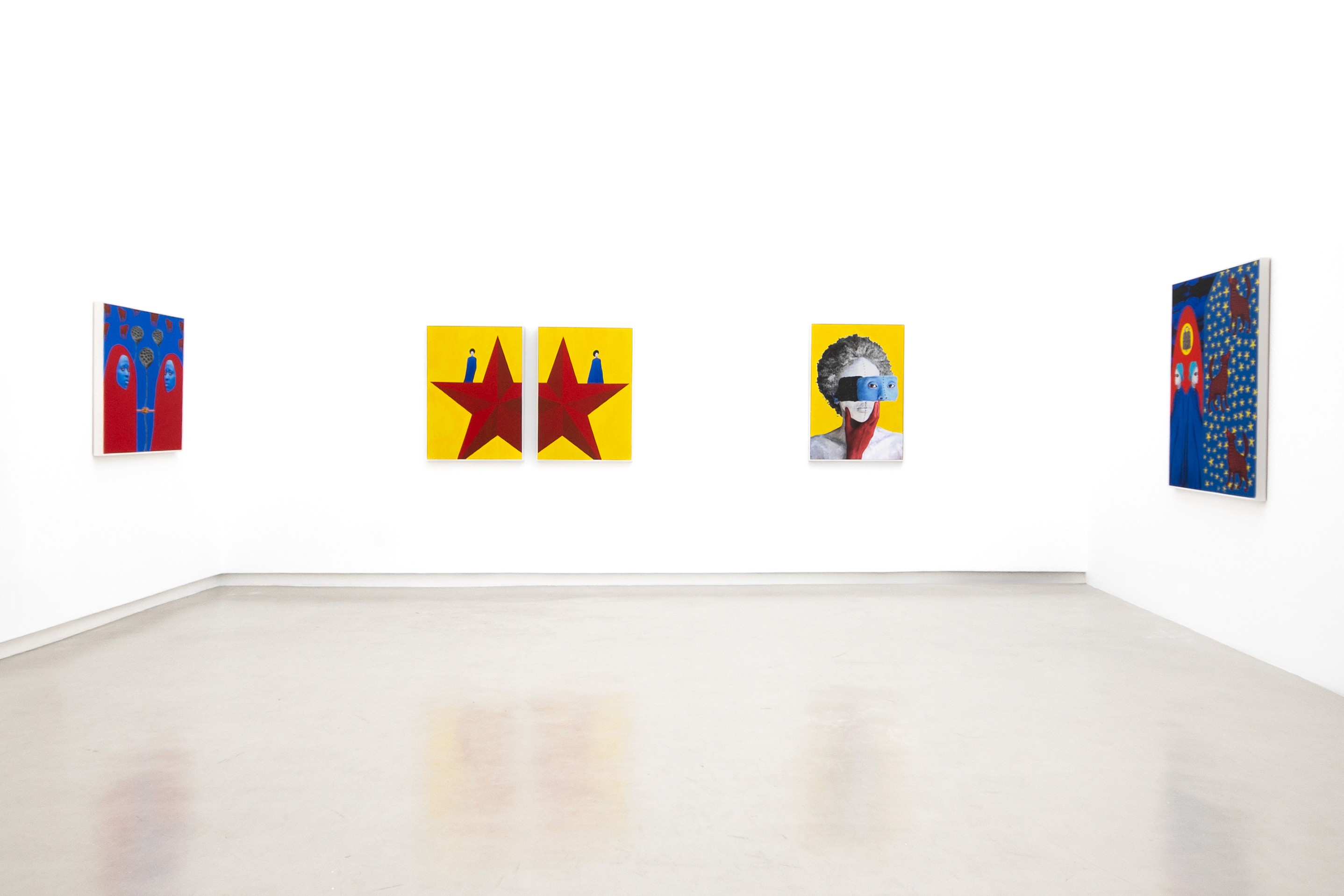
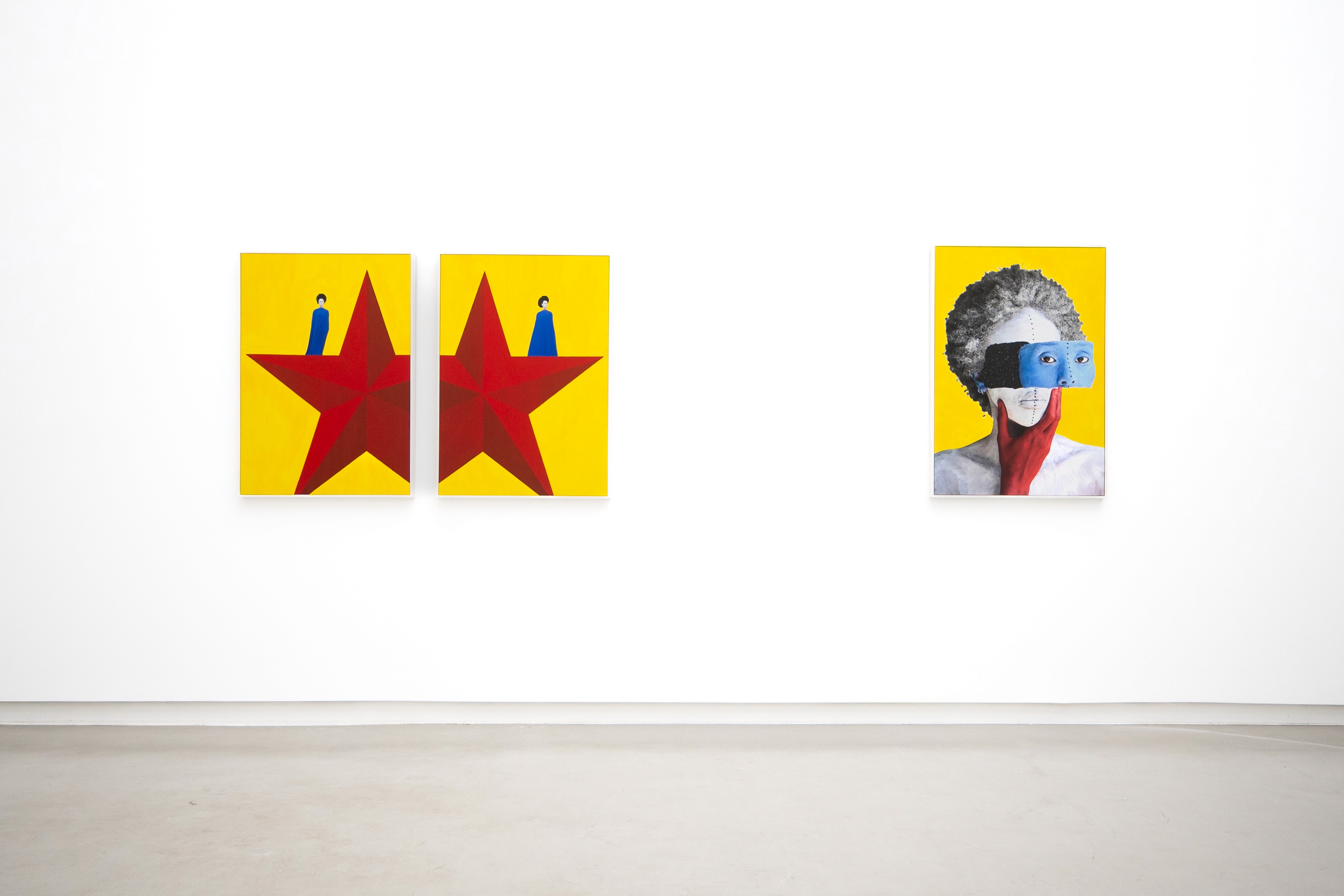
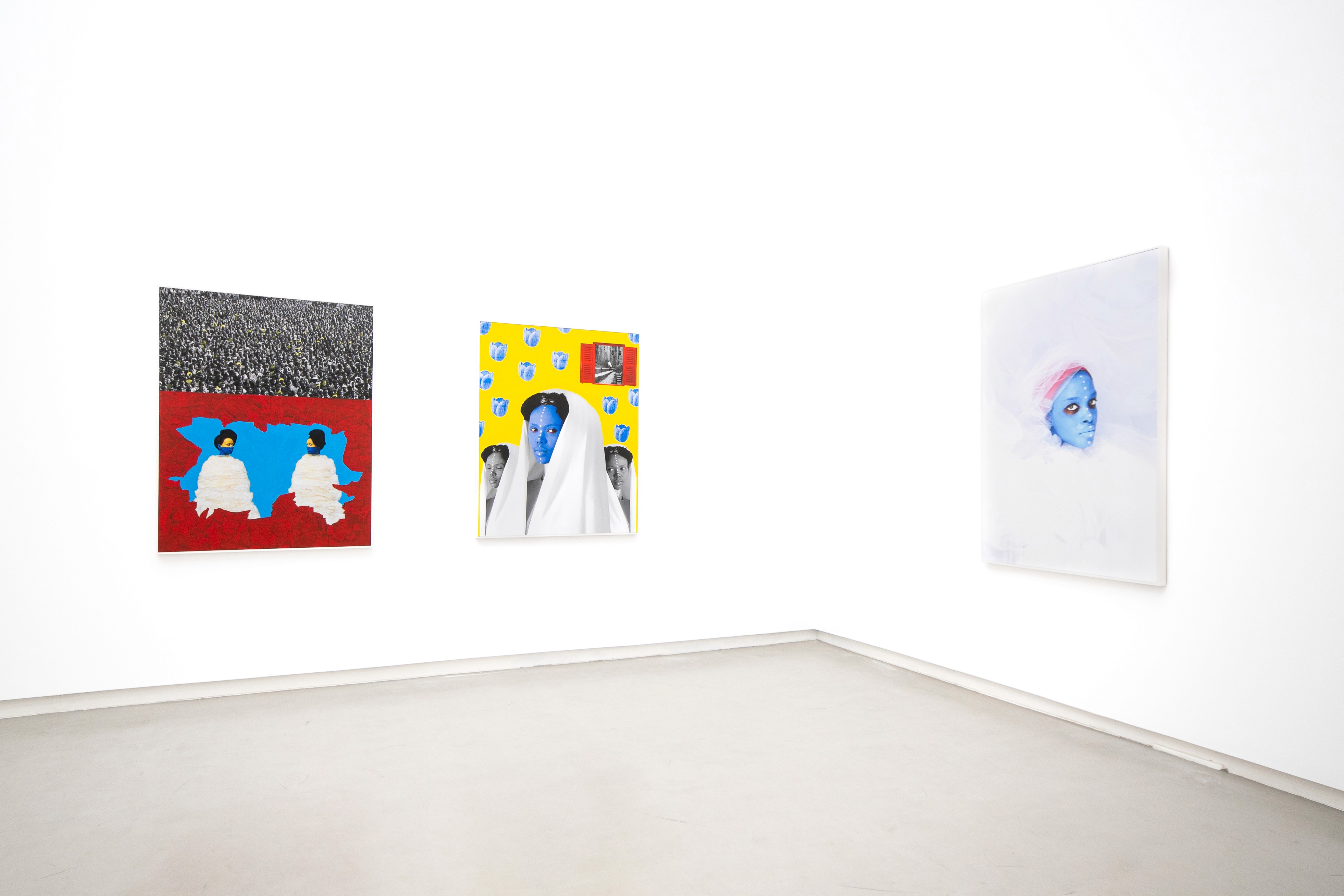
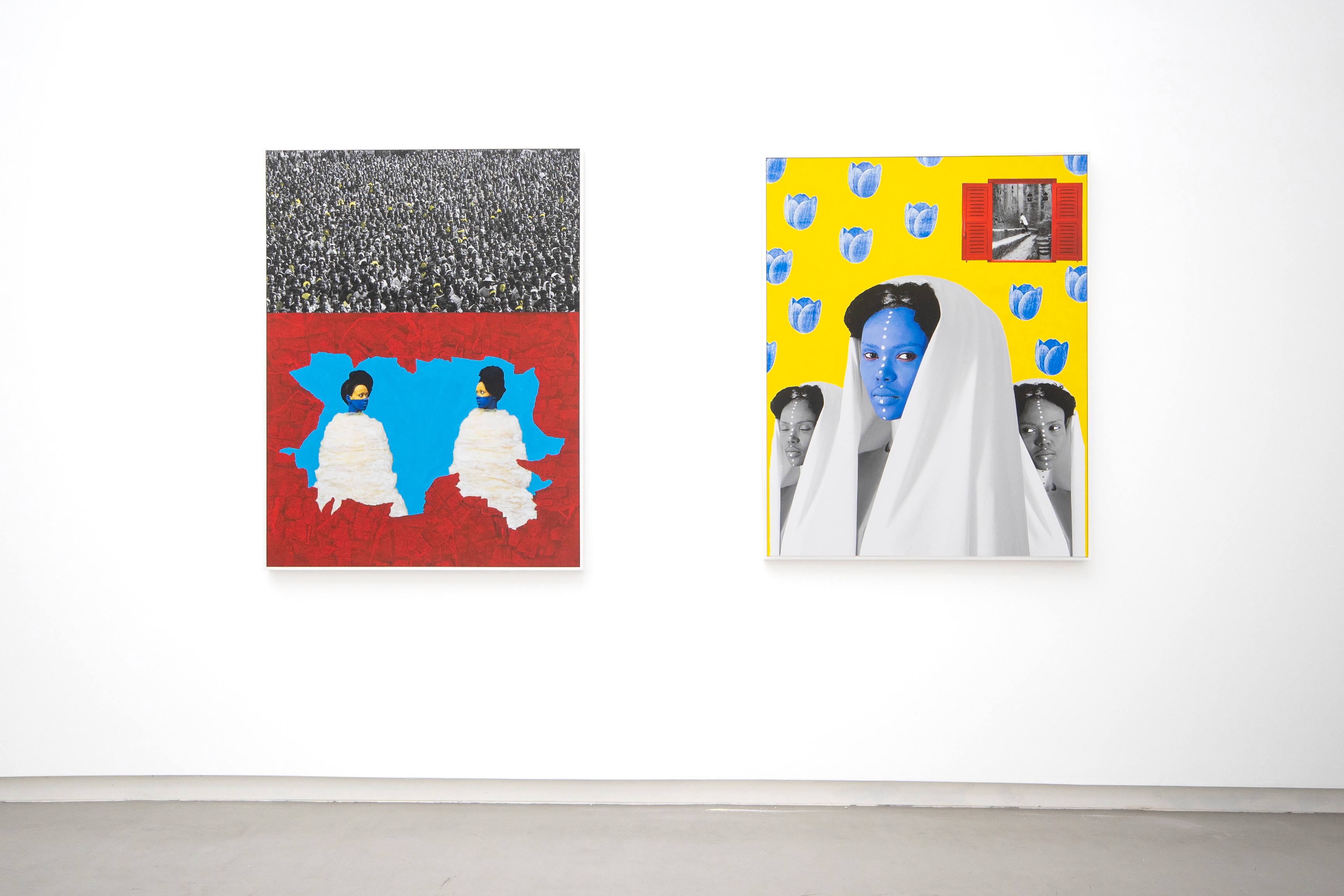
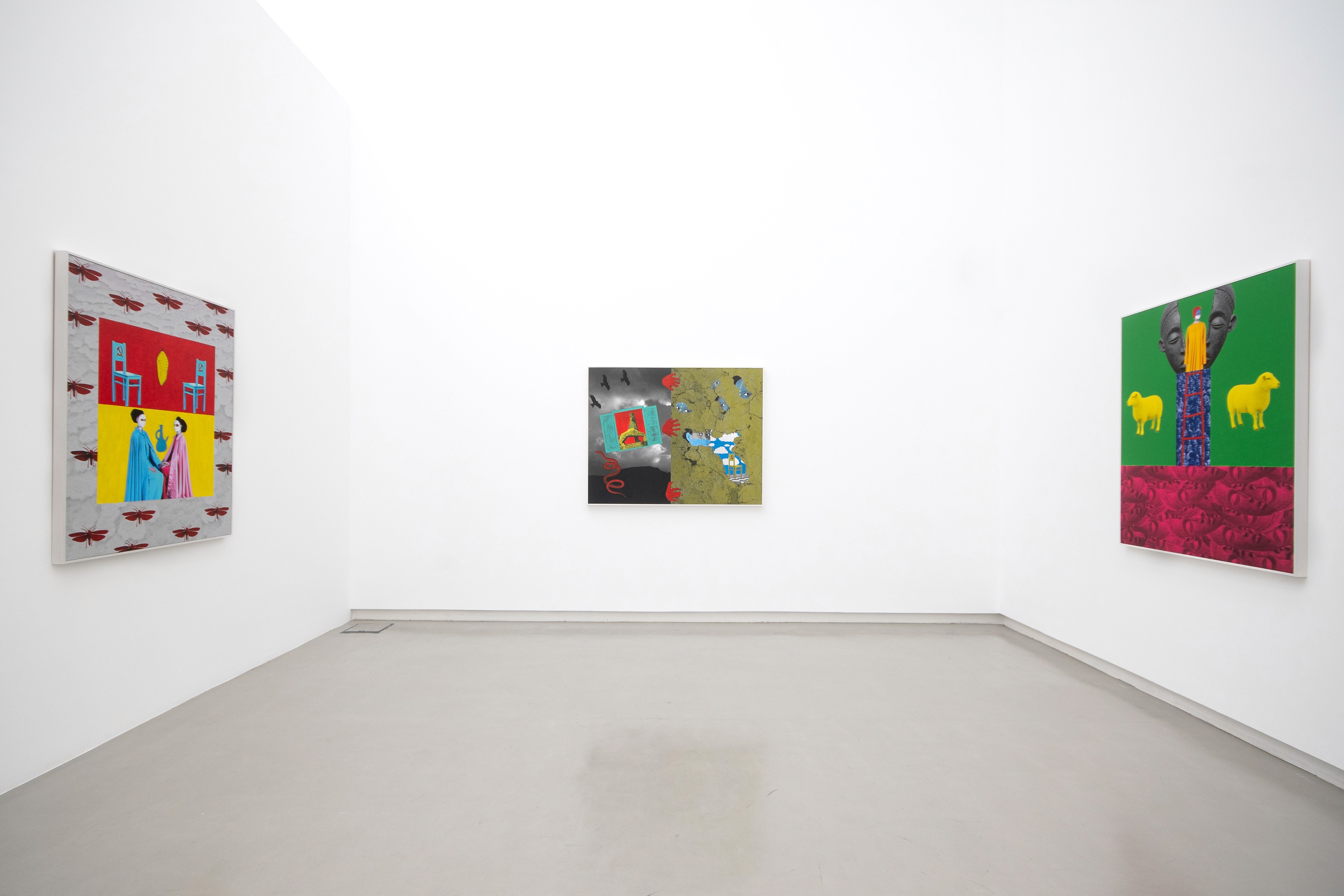
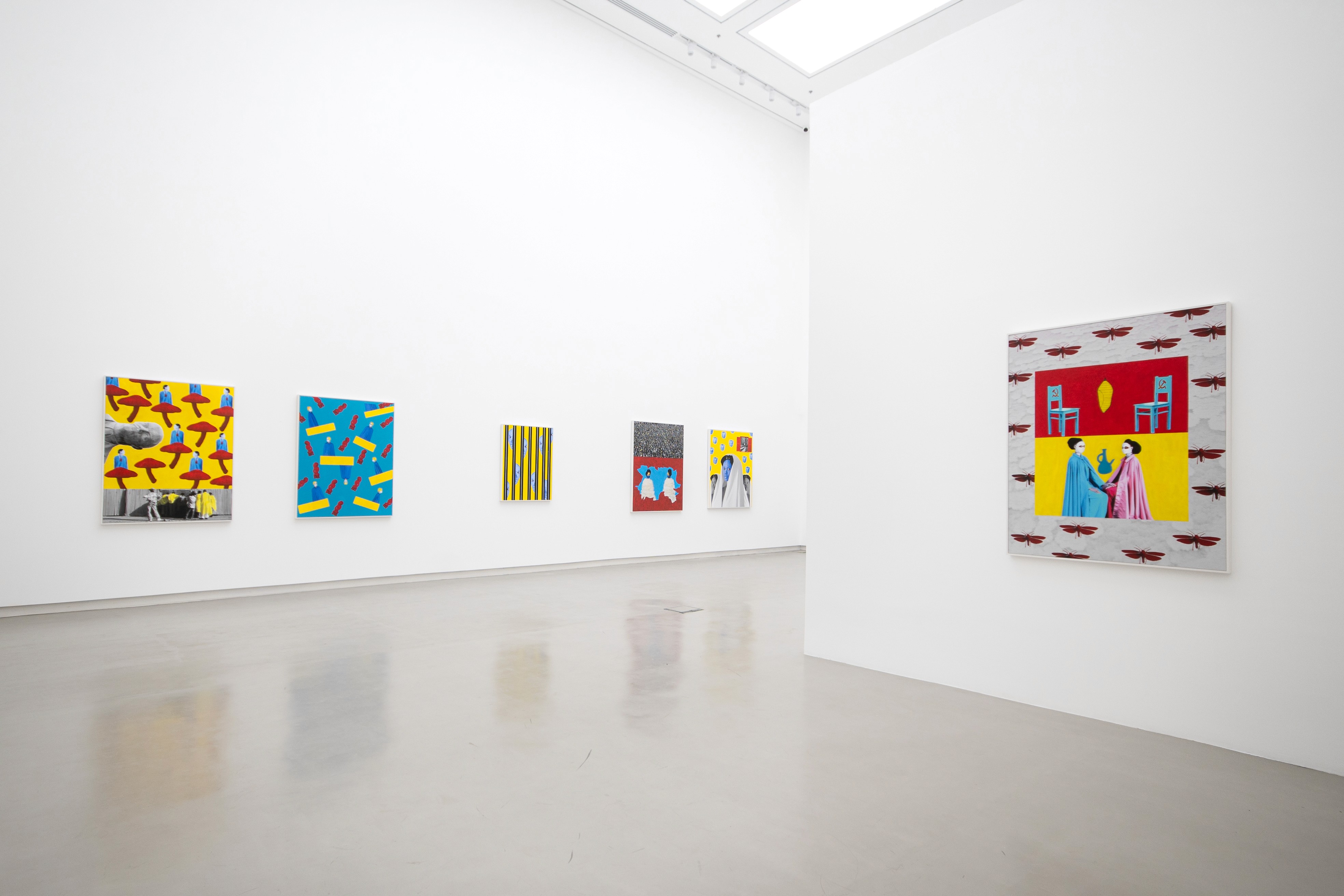
It is precisely this ontological and aesthetic experimentation to which Muluneh’s new work invites us: duality in relation to politics, history, and power, Remains of Delusion; duality between fragility and strength, with a nod to Frantz Fanon’s Black Skin, White Masks, The Hidden Learns to See; duality between appearance and reality shaping how we perceive ourselves, The Movement of Opposites; between memory and pain, In the Season of the Sorrow; the conflict between Jekyll and Hyde, evoked through the Delphic injunction know thyself, Know Thyself; the visible and the invisible, or consciousness and the unconscious; knowledge and transformation, or love born of pain, This Bloom I Borrow; observing and being observed, or self-awareness, The Shadow in the House. I will not review every work here. Rather, I wish to highlight this constant interplay between one thing and its opposite - a staging of yin and yang that forms the deep essence of our humanity, where nothing can be reduced to a single, fixed truth. It is this continual back-and-forth that enables balance and self-acceptance.
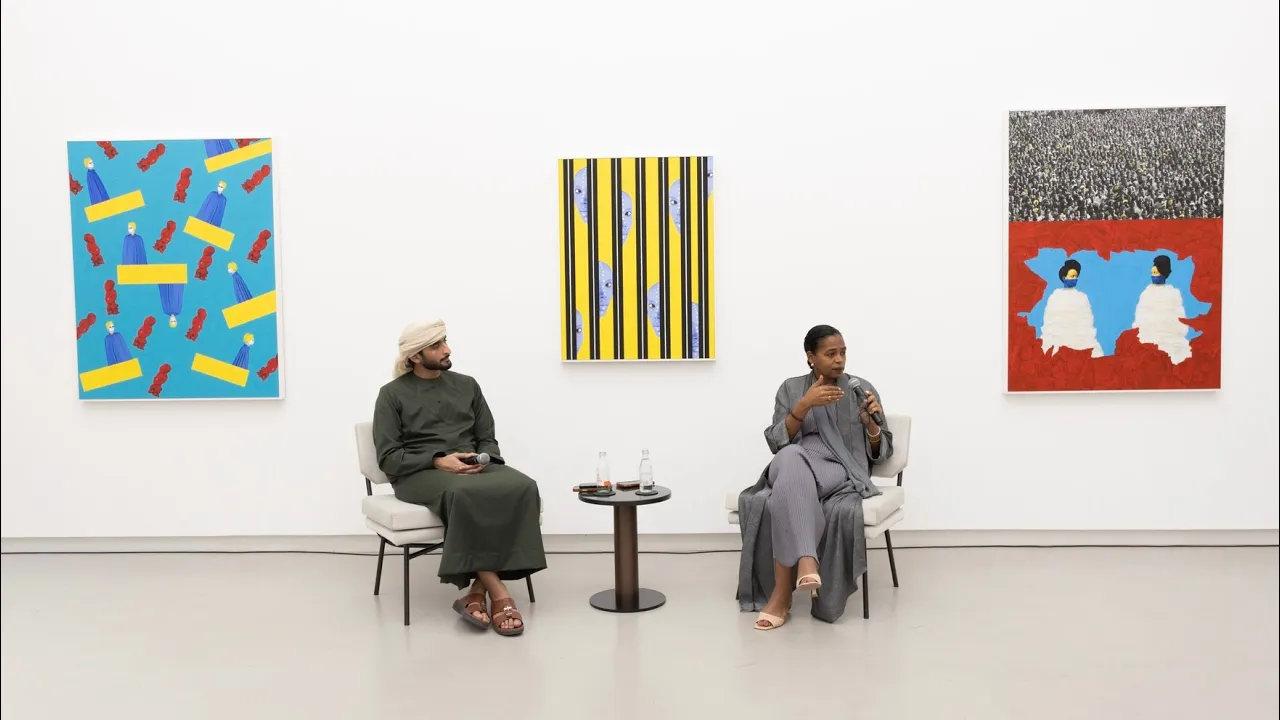
I would nonetheless like to pause on one final image, which introduces a dimension ever present in the series - its playful use of mise en abyme -but which, with Crowd, moves beyond the intimate to express a collective emotion. This collective illusion is reproduced - or at least its effect - through the filter of personal memory. Although the image is planar, the artist introduces depth of field through a stratification of signs that our mind instinctively hierarchises: a dense crowd, a wall punctured by an opening, and at the centre of this breach, two women seemingly surprised to find themselves the focus of attention. Yellow, blue, and black stand out against the monochrome of the rest of the image, contrasting with the greyness that evokes the apathy of the masses, Belonging, Elsewhere. On one side lies the hope of a possible future; on the other, the dreary routine of a laborious daily life. These two women may well be a metaphor for the artist herself, caught between two worlds - a stubborn, burdensome past and an uncertain future.
The use of her earliest images her documentary or photojournalistic period - which suddenly become archival, underscores the invisible bond between this dual figure and the crowd evolving behind a wall of clichés and received ideas. Despite the opening created, the crowd appears determined to remain within this uncomfortable zone of political and societal comfort. Here, the back and forth and the possibility of transformation perceived throughout the series seem blocked, despite the artist’s efforts to make - two seemingly incompatible worlds coexist. What renders Muluneh’s new work so resonant is undoubtedly her choice of allegory. The dominance of red and blue is far from incidental. Blue is the coldest colour on the chromatic circle; in false-colour thermographic images, it invariably signifies cold. Classical painting teaches that atmospheric perspective consists in bluing distant forms, and that shadows in recesses are cooler and darker than local tones. Red, by contrast, functions as the colour of shock, fire, violence, and malevolent spirit, but also as the divine colour of a supernatural world of joy and redemption - as in cardinal purple.
We thus enter the realm of painting, the final duality explored in this body of work. Muluneh pushes photography to its limits by incorporating the gesture of the hand—this hand whose memory reaches back to the dawn of time, and which French writer André Malraux described in The Voices of Silence:
“In the evening where Rembrandt still draws, all illustrious shadows - and those of the cave artists - follow with their eyes the hesitant hand preparing their new survival or their new sleep… And this hand, whose tremor has been accompanied by millennia, trembles with one of the most secret and most elevated forms of the strength and honour of being human.”
Naturally, when Malraux speaks of “man,” he means humanity. Muluneh inscribes herself within this millennia-old tremor, expressing emotion and reflection through allegory in order to unsettle our certainties. Allegory is often mistakenly confused with metaphor. Whereas metaphor concerns a single element, allegory involves a plurality of elements organised within a syntax. It is therefore “a system of relations between two worlds,” or “the analogical linking of two more or less detailed isotopies.” We are thus at the very core of the artist’s project, as underscored by Jon Whitman—author of Allegory: The Dynamics of an Ancient and Medieval Technique - who defines allegory as a form of “secret and refined discourse that the people cannot or do not deserve to hear; a language reserved for the elite.”
While Whitman restricts the deciphering of allegory to an elite, Muluneh, by contrast, seems to use it as “the universal figure through which all of humanity enters the intellectual and moral order.”
For to reach the universal, one must be anchored somewhere - in a specific place that is not merely geographical, but cultural, intellectual, and mnemonic. Before her, many artists employed this “coded” language to access the complexity of hermetic worlds: Arcimboldo through visual analogies, or Pieter Bruegel the Elder in his depiction of Flemish Proverbs. With this series, Muluneh moves away from photography and geography to tell us a new story of the world.